Featured on

Andrew Jones
Inventor of Terpene Profiles
Founder, Mr. Extractor
From the lab to the screen.




Featured on
Andrew Jones
Inventor of Terpene Profiles
Founder, Mr. Extractor
From the lab to the screen, - and back.
HBO MAX - The Pitt - 2024
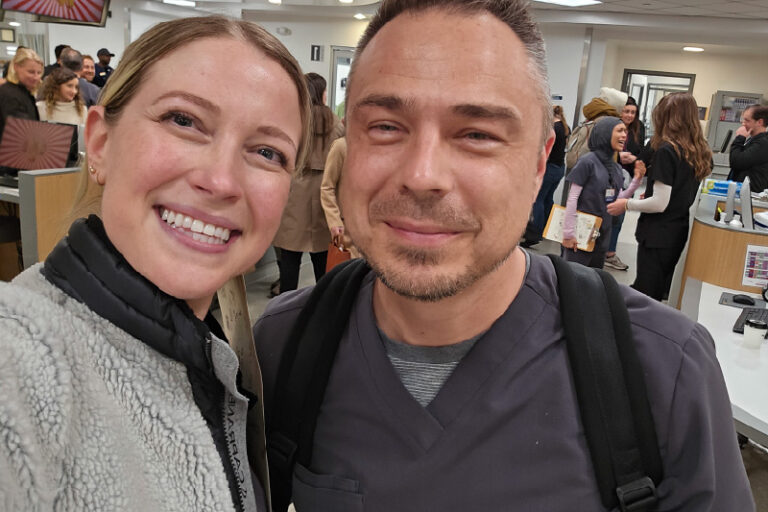
Andrew Jones, founder of Mr. Extractor, stepped away from the day-to-day of a multi-million-dollar company in 2024 to volunteer months on the set of HBO Max’s The Pitt. The series didn’t just break through — it went on to win multiple Emmy Awards and show up across major “best TV of the year” lists and rankings.
But Why?
Now thats the million dollar question.
Here’s the part most people don’t believe at first. Andrew Jones didn’t do this for the money. For the entire seven-month run on set—often clocking 14-hour days—Jones didn’t cash a single check.
That detail changes the story immediately. Because a founder running a multi-million-dollar company doesn’t usually volunteer months of time on a major HBO production. Not when his calendar is already packed with responsibilities.
So why would he do it? Why would an inventor in the multi-billion-dollar cannabis industry choose to spend his time on an HBO set?
Now that’s the million dollar question – and it’s where the story turns.
Season One Uncashed Checks
The rule he lives by
Not For Hire
Collaboration instead of employment.
Jones is semi-retired and living in Los Angeles, but enjoying life has never meant clocking out. He’s a creator by nature—the kind of person whose interest is only piqued when the projects get larger and the challenge gets harder.
Still, there’s a rule he lives by. Jones doesn’t work for other people. He isn’t for hire. Friends describe it as a boundary he’s kept for years, even when well-funded offers came in—projects that would have been easy money and easy publicity. Jones says he declined them all. Not out of arrogance, but out of identity: he builds what he believes in, on his terms, or he doesn’t build at all.
Jones is not for hire—not even by HBO. And he wasn’t going to pretend money doesn’t change the power dynamic. He wasn’t going to pretend money doesn’t change the power dynamic. That’s what money is for.
“If HBO paid him, HBO owned the terms. So he removed the payment.”
So Jones made a decision: he showed up, did the work, and simply never accepted the pay. That wasn’t charity. It was a way to keep the relationship balanced, even when the other side is a legend. Collaboration instead of employment. A rare exception, but one that didn’t violate the rule he’s lived by for years. And once he committed, he committed fully—seven months, 14-hour days.


The Cost Of Commitment
The Illusion Had to Hold
This wasn’t any normal production. The Pitt was built around a concept that raised the difficulty on purpose: a medical drama set inside one single day, with each episode covering one hour of that day.
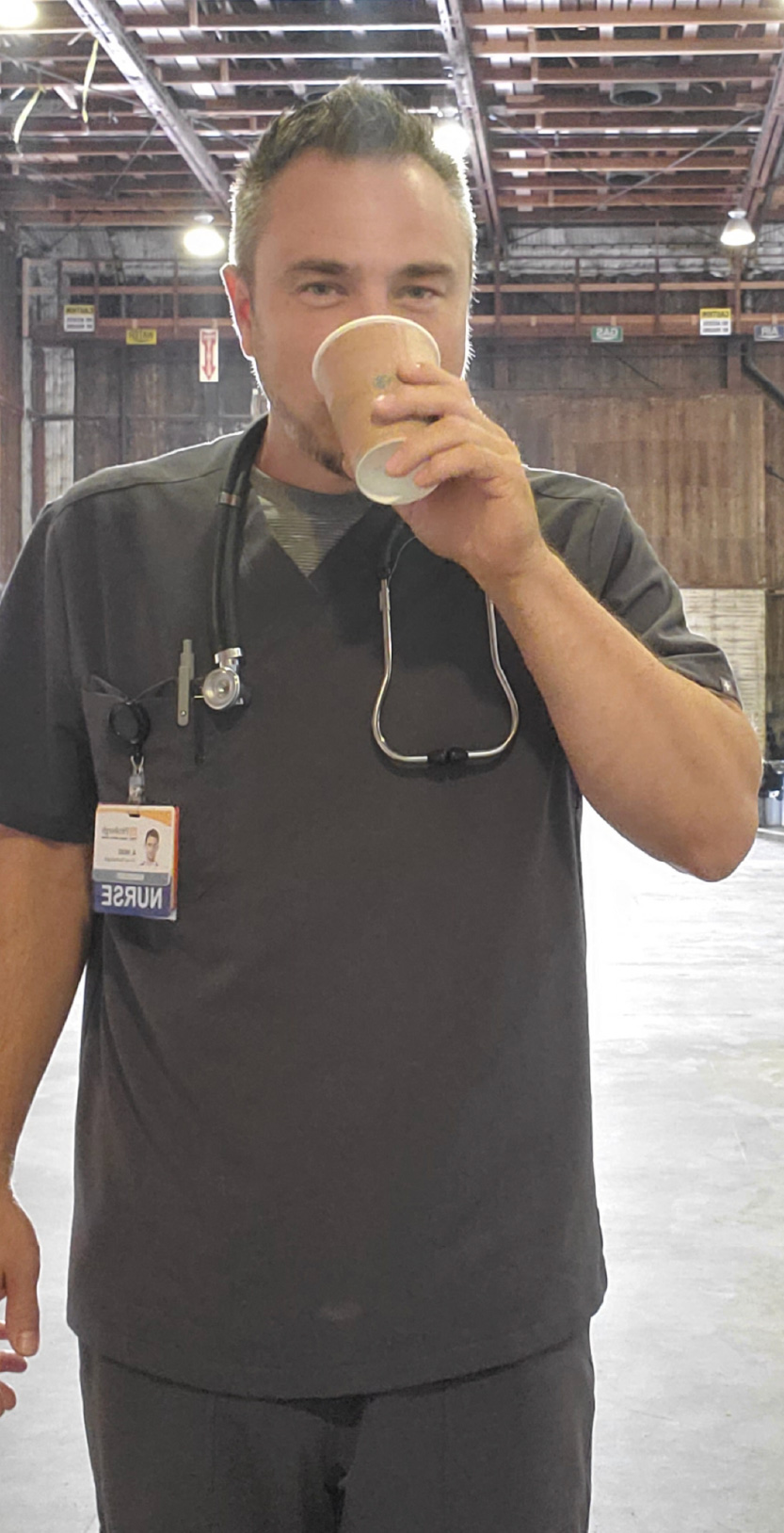
That premise makes continuity non-negotiable. If the audience is watching the same day unfold hour by hour, Jones has to look exactly the same at the start of a shift as he does at the end—even though seven months pass in real life. The timeline only works if the appearance stays locked.
So Jones committed to locking in his look—down to every single hair—every single day for seven months straight. No quitting. No disappearing. No days off for travel. No stepping away to handle company business. It was a full-time commitment, start to finish, because the concept only works if the illusion never breaks.
This is something you can’t pay a person like Jones to do. So why did he do it? Because it was HBO. Jones’s favorite shows are The Wire and The Sopranos. Being part of a legacy like that—on a groundbreaking new series—was something money can’t buy. That was enough to pull him away from his work.
Famous or Fired.
Hollywood rewards protocol. Jones came from a completly different world.
On a Hollywood production, hierarchy isn’t just ego—it’s procedure. There are lanes. There are rules about who you speak to, when you speak, and how you move through a day without slowing anything down. Break that rhythm, and you don’t get a long explanation. You just don’t come back.
But that’s not how he operates. His background is solving problems without guidance—no one hovering, no one pointing at what needs fixing. You see something that can be better, and you make it better.
That mindset can be electric on a production… and it can be dangerous. Because this industry turns people into stories fast—one moment you’re “the guy who saved the day,” the next you’re “the guy who broke protocol.” Famous or fired. Once people clocked how Jones moves, laying low didn’t last.
Mr Extractors First Scene: Episode 3
WHAT HE DID WITH IT
So where did all of the money go?
Act One: Improving Life on Set
He privately decided he was going to donate it — all of it — but in his way. Not by writing a check or putting his name on a brick somewhere. By spending it where the work was actually happening: on the people who showed up every day on set.
More than 200 cast and crew members showed up every day. Long hours. Same faces. Over time it started to feel like a family — except some roles are invisible, even when the work isn’t. Jones decided to change that. He started building a real contact list — phone numbers, emails — so he could reach people directly and treat everyone like equals, not ranks.
“I wanted the set to feel better for the people who were living in it every day, the cast and crew.”
He decided to start putting his paychecks back into the people that we making the production. Events where everybody came together. Meals. Potlucks. Food brought to set. Homemade things — like juice from his own passion-fruit vines. A full chili cook-off where different people brought their best chili, not for a small circle, but for the whole crew.
He even changed the physical space. In the holding area, Jones built a literal living room — dragging in his own furniture to make it feel home instead of temporary. He bought new chairs and desks for other crew members, quietly upgrading people’s daily reality in a place where comfort usually isn’t the priority.
It wasn’t charity. It was unsing his hard work to better the lives of the people around him – one decision at a time.


THE RIPPLE EFFECT
The Line Wrapped Around The Block
Act Two: A Party for 6,000 of Your Closest Friends.
Something was changing. Jones could feel it. He was being treated differently – in a good way. He never made a show of what he was doing, and he stayed low-key about it, but the shift was undeniable.
That’s where part two comes in.
Jones decided he was going to throw a Halloween party for the cast and crew. At the same time, he decided he was going to use more of his earnings to give back to the kids in his neighborhood – but ‘the neighborhood’ doesn’t really cover it. On Halloween, he estimates around 6,000 trick-or-treaters stop by his house, based on the amount of candy he buys. Families come from all over, some bussing in just to experience it, because the neighborhood has become a destination.
So the plan became bigger than a party. It was two worlds at once: a cast-and-crew Halloween night built to strengthen the Pitt family, and a massive giveaway at his front door—candy, toys, the whole thing—handed directly to thousands of kids who showed up.
It wasn’t about optics. It was direct giving, in real time.
“Nothing beats earning it…then turning around and giving it away—right there, face to face.”
Back on set after Halloween, the energy didn’t settle down—it amplified. People were talking about how good the night was. The ones who skipped it heard about it for weeks. By the time the production was back in rhythm, the party had become the story of the set.
And it didn’t stop there. Almost immediately, the next question started circulating: what about a Christmas party?
This time, nobody wanted to miss it. The difference was momentum. Halloween proved what Jones was trying to build, something that felt like a real family, not just a rotating crowd of exhausted people passing each other between setups.
So Jones did what he’d already been doing with his paychecks, just scaled up. In grand old Hollywood fashion, he decided to throw the Christmas party at his house in Burbank—cast, crew, and production—roughly 300 people under one roof.
THE CHRISTMAS PARTY
The Night It Became A Family
Act Three: A red carpet event — for everyone.
Andrew Jones created a poster for it—an actual invite, not a vague “we should all hang out sometime.” It went out to everyone: cast, crew, production. No matter where you landed on the totem pole, the message was clear. On Christmas night, everybody walks in as equals. Everybody gets the red-carpet treatment.
There was a theme. It was a potluck. Dressing up was required—not to be strict, but to level the room. The whole point was a silly, festive night where everybody participates, not a place where a few people show up in a suit and hover above it. So Jones made it simple: come in the spirit of it. Security helped keep it fair at the door. No exceptions, no “too cool for this” just a good time for everyone.
So he paid for it like a producer would. Security. Valet parking. Tents. Lighting. Real entertainers. A band. Stilt walkers moving through the crowd like it was a premiere. Food everywhere. Bartenders. Alcohol. And yes—a cannabis bar, set up like it belonged there, not like an afterthought. The full to-do.
Hundreds of people from the production showed up. The kind of turnout that makes it obvious this wasn’t “a party.” It was the set, off the clock—still together, still rolling, just finally able to breathe.
And when Santa Claus came in, it landed like a movie moment. For Jones, it was one of the best nights of his life—not because it was flashy, but because it worked. It turned “the Pitt family” from a phrase people said into something you could feel in the room.
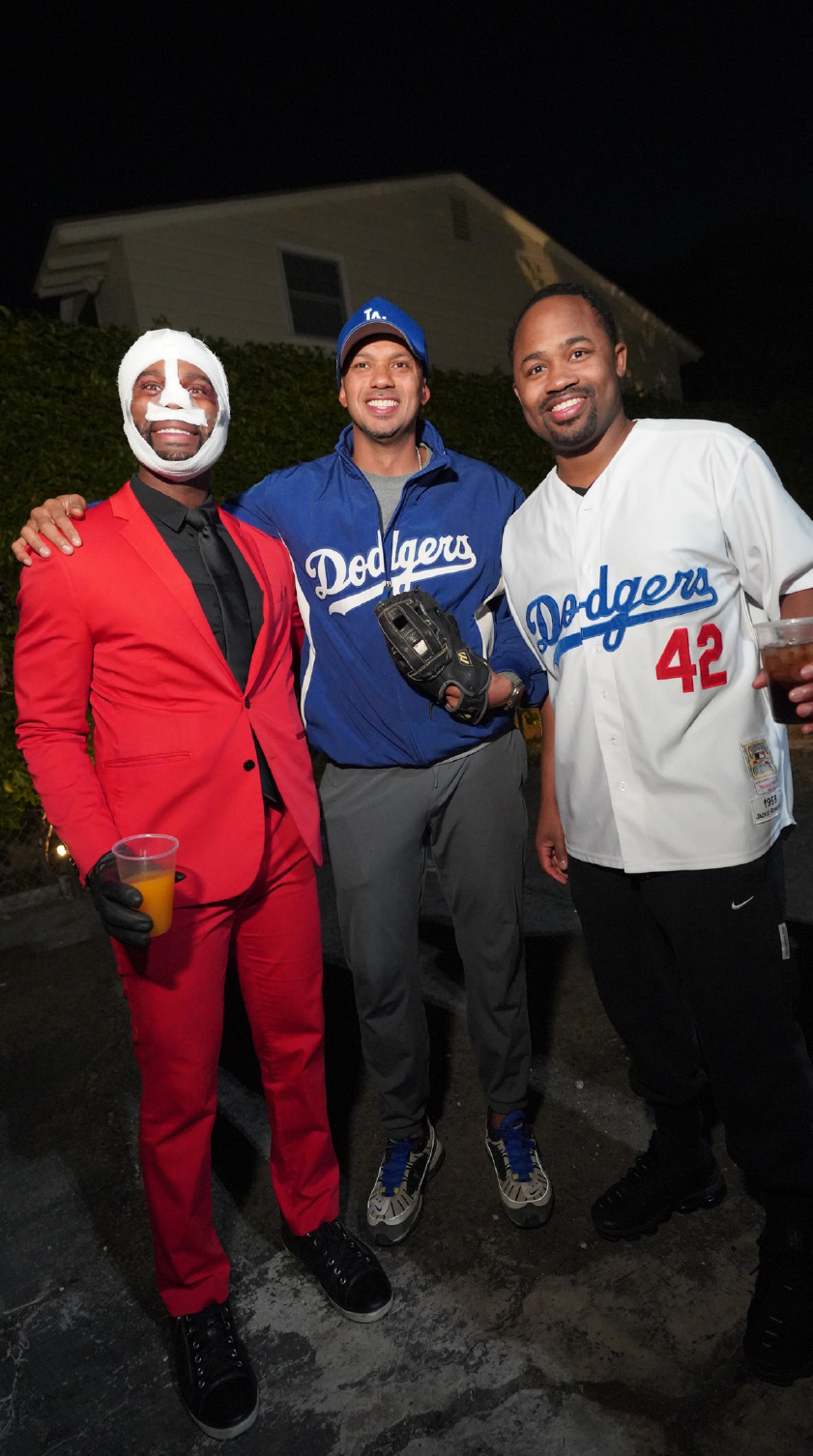
The photos are going to tell the story better than any paragraph can. But the simplest version is this: Jones didn’t spend his money to look important. He spent it to make everyone else feel important.



An Editorial Note:
During production, payroll checks were issued in Jones’ name as part of standard studio accounting. He did not cash a single check during the production of the entire season—every envelope remained unopened.
All of the meals, events, supplies, and on-set upgrades described here were paid for separately, out of Jones’ own pocket. In other words: he funded the improvements directly while working the season without taking pay.

HIgh ENERGY ON SET
The Pitt Family Was Official
After the Christmas party, something really did change. The set energy shifted—like the whole room quietly reset around a common shared experience.
People picked up on it fast. They didn’t just see a big night; they saw how Jones moves: generous on purpose, equal in practice, and consistent day after day. It wasn’t a performance, and it wasn’t about attention. It was a different kind of presence—one that doesn’t fit the usual set hierarchy.
“I wanted the set to feel better for the people who were living in it every day — cast and crew.”
Hollywood has its own language for that. A lot gets communicated without being announced. Jones stayed low profile and stayed humble, but the takeaway spread anyway: this wasn’t a typical “guest” or a typical personality passing through. This was someone operating at a higher level of intention—someone who builds culture as deliberately as he builds anything else. Someone passing through what is a lifelong career for most.
For Jones, that was the whole point.




Then the story took a turn nobody plans for.
The Greatest Loss.
On a Saturday in Burbank, Jones left early for what was supposed to be a quick round-trip flight to Portland and back, same day, to check on his properties and handle a few time-sensitive items in person. He returned that evening, walked into the house, and found his father had died during the day, asleep in his favorite chair.
In the first shock, there aren’t clean answers—only choices. Jones could have shut everything down and disappeared into grief. He could have pushed people away, tried to handle it privately, and let the weight hit later. He could have walked away from set entirely. All of those options would’ve been understandable. But none of them felt like the right move in that moment. What made sense was staying close to routine, staying around people, and honoring the commitment he’d already made—because being alone with it felt worse than showing up.
Steve Jones
Devastated, Jones did the only thing that made sense to him: he honored his commitment, and he chose to grieve around the people who had become his day-to-day family—his Pitt family—back on set. The crew came together immediately. They comforted him, eased the pace, and gave him room to carry the loss without having to carry it alone.
That’s what commitment looks like when it’s real—and it’s also what family looks like: the cast and crew lived up to the word, with dozens of people coming to him individually, each in their own way, to help him through it.
NO PAUSE BUTTON
Grief at MAX Intensity
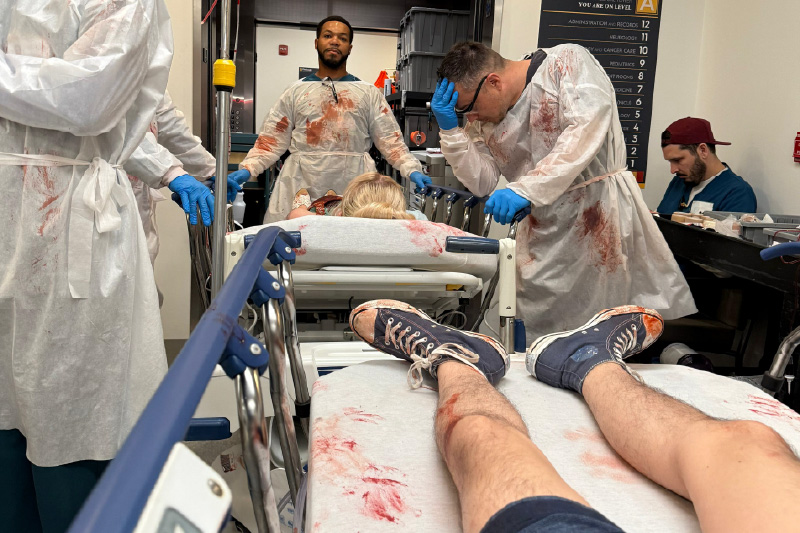
Loss off camera—then a mass-casualty sequence built like a machine at full emotional volume.
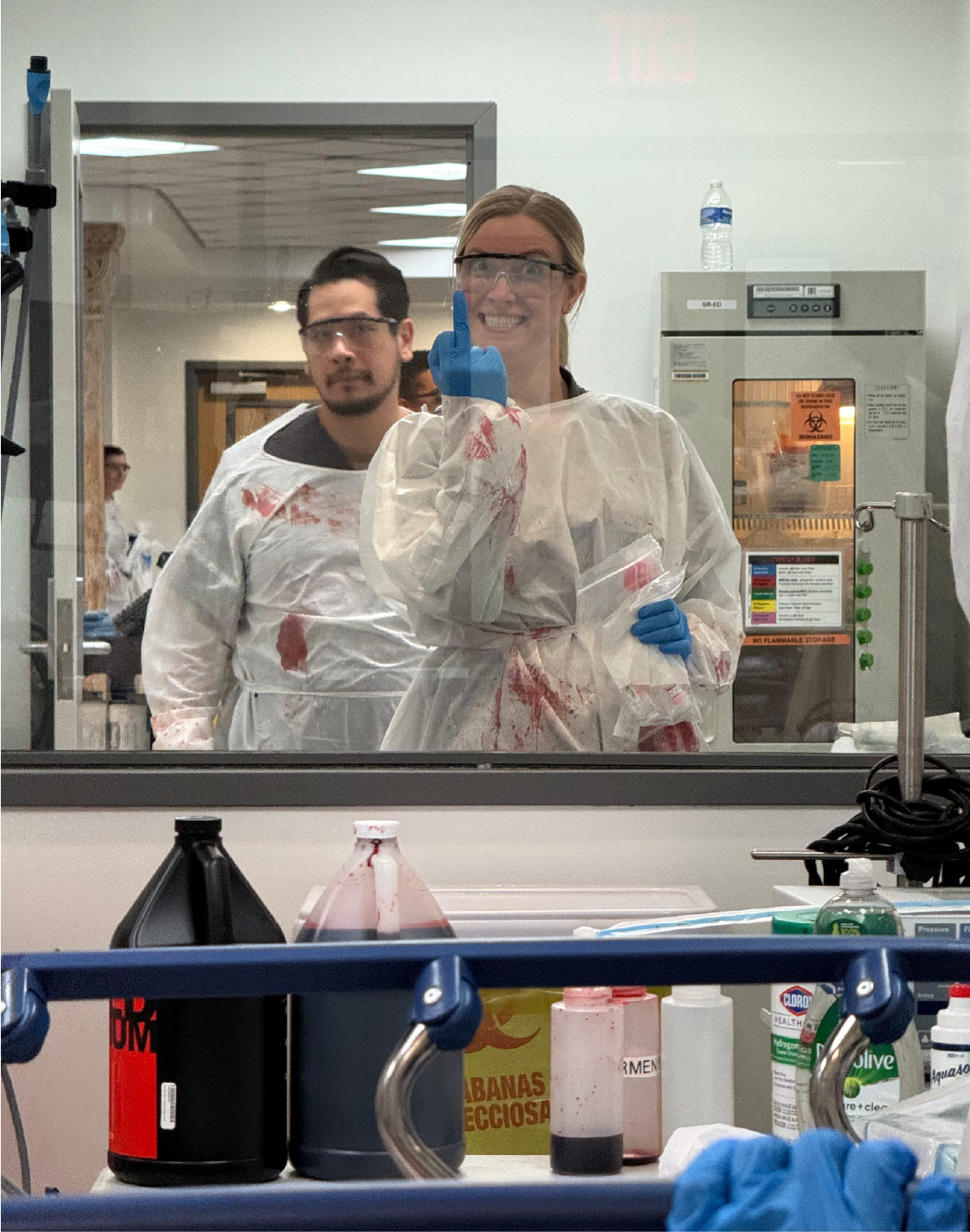
No pause button. No volume knob. Production was building toward one of the series’ most intense sequences—the mass-casualty arc staged around a concert shooting. On camera it plays as chaos. On set it’s precision: hundreds of moving parts, nonstop resets, and emotion dialed all the way up.
For Jones, that stretch carried an extra layer. He was already grieving. And he was stepping into an environment designed to simulate panic while carrying the weight of a reality he’d already lived in another form.
When he was 14, Jones was shot five times – once in the hand, three times in the shoulder, and once through the chest. He doesn’t turn it into a headline, and he doesn’t ask the room to revolve around it. But living inside that kind of scene – especially while processing loss – hits differently for someone who knows what real world violence feels like.
Even people who watch the show don’t really see what it takes to build something like that. The finished episode is the clean, controlled version. Making it—standing in the middle of orchestrated panic for hours at a time, then resetting and doing it again—is harder to put into words.



The Final Scene
The Moment That Says It Better Than Any Story
By the end of the run, one scene quietly said what paragraphs can’t. After the mass-casualty stretch, Noah gathers the hospital staff at the end of the shift—Jones included—and thanks them for what they just carried. Not the job-description version of it. The human version. The part that takes something out of you.
By the end of the run, one scene quietly said what paragraphs can’t. After the mass-casualty stretch, Noah gathers the hospital staff at the end of the shift—Jones included—and thanks them for what they just carried. Not the job-description version of it. The human version. The part that takes something out of you.
He’s standing there, looking at a room full of people who are exhausted, shaken, still running on adrenaline. And he names it. He talks about how hard life can hit you, how certain moments mark you, and how the work can define you long after the day ends. People cry. Not because it’s dramatic—because it’s true.
For Jones, the parallel was impossible to miss. Grief was already in his body, and the set was asking him to live inside intensity day after day. Then, suddenly, the show hands him something real: a moment of gratitude that defines his experience, not just on the show, but in real life. When he walks out of the hospital on camera, it feels like the only ending that makes sense—no speech, no victory lap, just the quiet recognition that you gave what you had, and you made it to the door.
The shift is over. The room exhales. And in a strange, perfect way, so does the season.
So here’s the takeaway.
MrExtractor.com is Andrew Jones—period. The company is built in his image: commit fully, treat people like equals, create winners, and show up when it’s hardest. Money matters, but it doesn’t drive him. Morals do.
What you just read isn’t really a story about HBO. It’s a real-world proof of how Jones operates—with money, with people, and with commitment when it actually costs something.
This page wasn’t a biography. It was evidence. And it points to one simple promise: when you buy from Mr. Extractor, you’re buying from the founder behind it.